

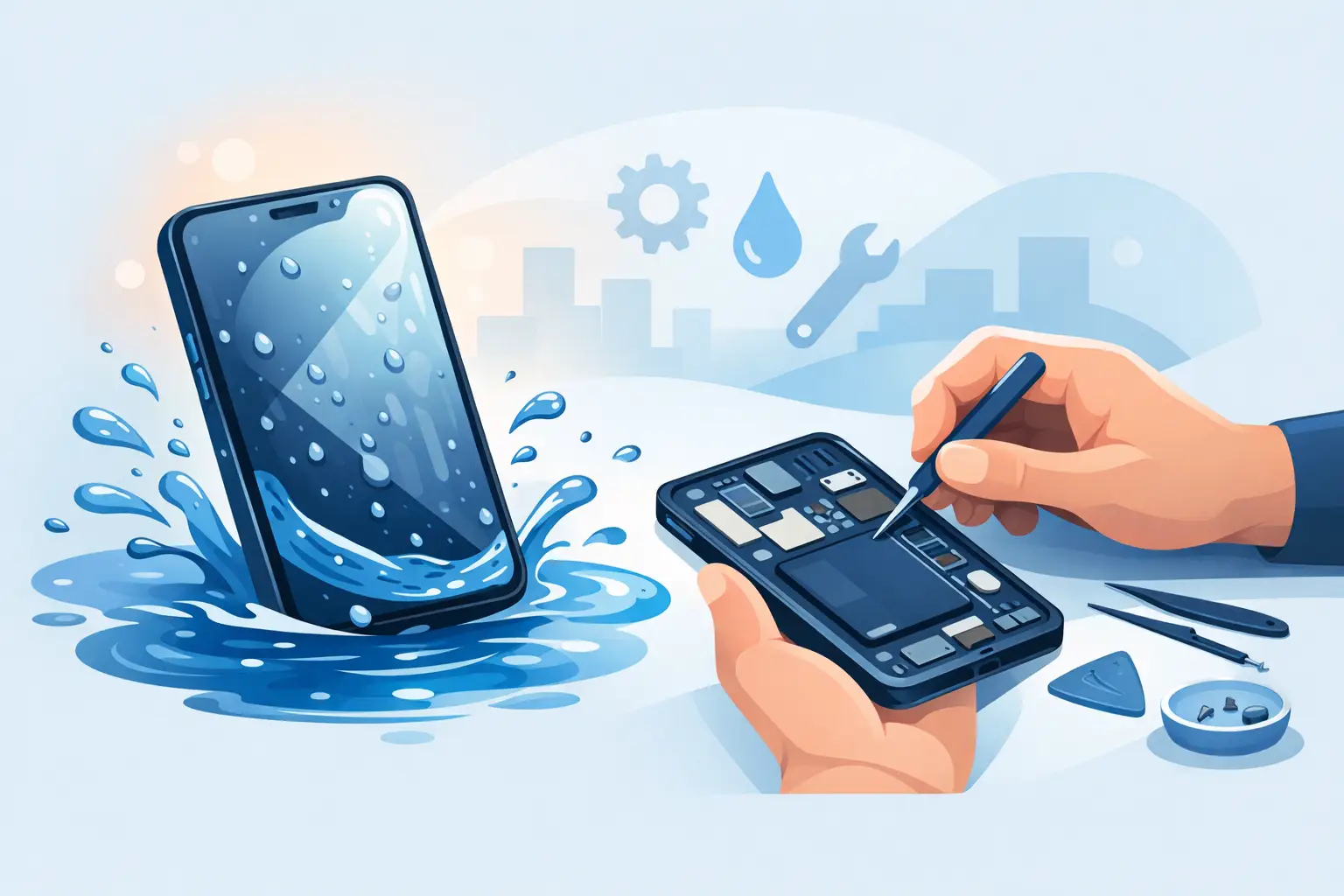
A phone dropped in the sink or left in a rain-soaked pocket can go from perfectly fine to completely unresponsive in minutes. The good news is that whether water-damaged phones can be repaired is not a simple yes or no – many can, but the outcome depends on how quickly the device is handled, what liquid got inside, and which parts were affected.
Water damage is one of the most misunderstood phone faults. People often assume a phone is either dead beyond repair or magically saved by leaving it in rice overnight. In reality, successful repair usually comes down to fast action, proper diagnosis, and whether corrosion has already started spreading across the internal components.
Can water-damaged phones be repaired in every case?
Not in every case, and any honest technician should say that upfront. Some phones recover well after professional cleaning and component replacement. Others have damage to the charging circuit, screen, battery, cameras, speakers, or the logic board itself. If the board has suffered severe corrosion or shorting, repair may still be possible, but it becomes more complex and less predictable.
The type of liquid matters as well. Clean water is usually less harmful than sugary drinks, coffee, alcohol, or salt water. Those liquids leave residue behind, and residue keeps causing trouble long after the phone seems dry on the outside. That is why a device that switches back on after getting wet can still fail days later.
A lot also depends on timing. If the phone reaches a repair bench quickly, there is a much better chance of preventing secondary damage. Waiting too long gives corrosion time to spread under chips, around connectors, and across delicate solder joints.
What actually happens inside a wet phone
Most people think the problem is simply moisture. Moisture is only part of it. The bigger issue is that liquid can bridge electrical contacts that were never meant to touch, creating short circuits. At the same time, minerals and contaminants start reacting with metal surfaces inside the device.
That reaction leads to corrosion, and corrosion is what turns a recoverable repair into a serious board-level fault. It can affect the charging port, battery connector, display lines, audio components, Face ID or fingerprint systems, and the power management section of the board. Sometimes the damage is obvious. Sometimes the phone looks fine for a day or two and then stops charging, loses signal, or develops touch issues.
This is why simply drying the outside is not enough. A device can feel dry in your hand while liquid is still trapped under shields and connectors internally.
What you should do straight away
If your phone has been exposed to liquid, the first few steps matter.
Switch it off if it is still on. Do not try to test every function, do not plug it in to charge, and do not keep pressing buttons to see whether it still works. Every extra attempt can increase the risk of a short circuit.
Remove the case, SIM tray, and anything else detachable if you can do so safely. Then gently dry the exterior with a clean cloth. After that, the best move is to have the phone inspected properly. Professional treatment is not just about drying it – it is about opening the device, checking for liquid entry, cleaning affected areas with the right methods, and testing which components are still working correctly.
What not to do with a water-damaged phone
The rice trick remains popular because it sounds easy, but it is not a repair method. Rice does not remove residue, stop corrosion, or clean the inside of the phone. At best, it wastes time. At worst, it delays treatment while the damage spreads.
Heat is another common mistake. Hairdryers, radiators, and direct sunlight can damage seals, screens, batteries, and adhesive. Shaking the phone or blowing into ports can also push liquid deeper into the device.
Charging the phone too soon is one of the riskiest errors. Even if the handset appears normal, power running through damp or contaminated circuits can turn a manageable repair into a major failure.
How professional water damage repair works
A proper repair starts with diagnosis, not guesswork. The phone is opened carefully, and the internal components are inspected for signs of liquid ingress, corrosion, staining, burnt components, and damaged connectors.
From there, the technician will usually disconnect the battery first and assess whether the board can be cleaned and stabilised. In many cases, affected parts are cleaned using specialist tools and fluids designed for electronics, not household products. If corrosion has already damaged specific parts, those may need replacing. Common examples include the battery, charging port, screen, earpiece, loudspeaker, cameras, or board-level components.
This is where experience matters. Water damage is rarely a single-part problem. A phone might need a new screen but also have hidden charging faults. Or it may power on but have no backlight, no audio, or no network because of deeper board damage. Accurate diagnosis avoids temporary fixes and gives you a clear idea of whether the repair is worth doing.
Can water-damaged phones be repaired if they are not turning on?
Yes, sometimes they can. A phone that will not turn on is not automatically beyond saving. It may have a failed battery, a shorted charging line, corrosion around the power circuit, or damage to the display while the board is still alive.
That said, a dead phone always needs careful assessment because there are more variables involved. In some cases, the priority is not even full device recovery at first – it is data recovery. If the handset contains important photos, messages, work files, or app access, the repair strategy may focus on getting the board stable enough to retrieve data before deciding whether a full restoration makes financial sense.
Is repair worth it or is replacement the better option?
This depends on the model, the extent of damage, and what you need from the device. If the phone is relatively recent and only a few components need replacing, repair is often far better value than buying a new handset. It can also be quicker, especially if you need your device back for work, school, or day-to-day use.
If the liquid damage has reached multiple systems and the cost begins to approach the value of the phone, replacement may be the more sensible route. An honest repair shop should explain that clearly rather than pushing ahead with work that does not add up.
There is also the data question. Even when full repair is not economical, many customers still choose diagnostic work if there is a good chance of recovering important data. For some people, that alone makes the service worthwhile.
How long can a water-damaged phone take to repair?
Minor liquid damage can sometimes be assessed and treated quickly, especially if the phone arrived soon after exposure and the issue is limited. More severe cases take longer because testing is essential. A phone may need cleaning, part replacement, and repeated checks to confirm that charging, cameras, speakers, buttons, signal, and other functions are all stable.
This is one reason transparent communication matters. Water damage repairs are less predictable than a straightforward screen replacement. A good technician should explain what has been found, what can be repaired, what cannot be guaranteed, and what the likely next step is.
When local repair makes the most sense
With water damage, speed is often the difference between a manageable repair and a more expensive one. Being able to walk into a local repair shop, speak directly to a technician, and get a clear assessment can save both time and money. For customers around Bracknell and nearby areas, that practical convenience matters when your phone is your camera, banking device, sat nav, and work tool all at once.
At iRepair, water-damaged devices are assessed with proper diagnostic tools and a repair-first mindset. That means no vague promises, no hidden surprises, and no pretending every liquid-damaged phone can be saved. The aim is to identify the fault accurately, give you a clear quote, and repair the device properly if it is viable.
If your phone has been exposed to water, the main thing is not to wait for it to get worse. Even if it still switches on today, hidden corrosion can turn a small problem into a larger one by next week.