



A phone that only charges if the cable is held at a certain angle is usually giving you fair warning. Leave it too long and what starts as an annoying loose connection can turn into a device that will not charge at all. If you are looking for charging port repair Sunninghill, the key is getting the fault diagnosed properly before a simple repair becomes a bigger and more expensive problem.
Charging faults are often blamed on the port, but that is only part of the picture. A damaged cable, worn battery, software issue, charging IC fault or liquid damage can all produce similar symptoms. That is why accurate testing matters. Replacing parts without proper diagnosis can waste time, add cost and still leave you with the same issue.
When charging port repair in Sunninghill is the right fix
The charging port is one of the hardest-working parts of any device. It is used every day, often several times a day, and it takes strain from repeated plugging, unplugging, pocket fluff, dust and accidental tugs on the cable. Over time, even a well-looked-after device can develop charging problems.
Common signs that point towards a port issue include slow or intermittent charging, the cable feeling loose in the socket, the device only charging in one position, or no connection to a charger or computer at all. You might also notice the device getting warm around the port, or see visible damage such as bent pins, corrosion or debris packed inside.
That said, it depends on the device and the fault history. If the phone has been dropped while plugged in, the port itself may be physically damaged. If it has been exposed to moisture, there may be corrosion on the charging sub-board or the main board. If battery health is poor, charging can seem inconsistent even when the port is fine. A proper inspection separates these issues quickly.
Why charging problems are often misdiagnosed
From a customer point of view, the symptom is simple – the device will not charge properly. From a repair point of view, there are several possible causes, and they need to be checked in the right order.
A professional charging fault diagnosis usually starts with the basics. The charger and cable are tested, the port is examined under magnification, and the device is checked for contamination, impact damage or signs of liquid ingress. After that, charging behaviour is measured using proper tools rather than guesswork.
This is where many low-quality repairs go wrong. Some shops clean the port and call it fixed when the internal connection is already weakened. Others replace the port assembly without checking whether the charging circuit on the board is also damaged. The result is a temporary fix or no fix at all.
At a reputable repair shop, the aim is to repair the actual fault, not just the most obvious symptom. That matters whether you use your device for work, school runs, online banking or keeping in touch with family.
What causes charging port damage?
Wear and tear is the most common cause, but it is not the only one. Daily use gradually loosens connections, especially on devices charged in bed, in the car or while being used heavily at the same time. Pulling the lead out at an angle also puts strain on the port over time.
Pocket lint is another common culprit. It compacts into the port little by little until the cable no longer seats properly. In some cases, a careful clean is enough. In others, compacted debris has already bent internal pins or damaged solder joints.
Liquid exposure is more serious. Even a small amount of moisture can start corrosion inside the port or on nearby components. The device might still charge for a while, then gradually fail. Fast action helps here, because corrosion tends to spread.
With tablets and laptops, port damage can also come from knocks on desks, children yanking leads, or connectors being forced in when they are misaligned. USB-C ports in particular are compact and capable, but they still need precise handling and proper repair techniques when they fail.
What happens during a charging port repair
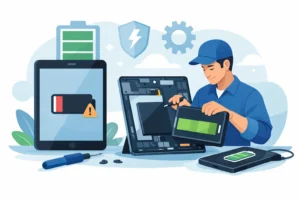
A good repair process should feel straightforward. You bring the device in, explain the fault, and the technician checks whether the issue is debris, physical damage, a faulty charging assembly or a board-level problem. You should know what has been found, what needs doing and what it will cost before work goes ahead.
For some devices, the charging port is part of a separate module or flex assembly. In those cases, replacement can be relatively quick once the device is opened safely. For others, the port is soldered directly to the board. That requires more technical skill, specialist equipment and careful handling to avoid damage to surrounding components.
This is one of the biggest differences between a proper repair and a rushed one. Board-level charging port work is not just about removing one connector and fitting another. The technician needs to protect nearby components, remove the damaged port cleanly, inspect pads and traces, and refit the new part with precision. If the board has been damaged by impact or corrosion, that also needs to be dealt with.
When done correctly, the repaired device should charge consistently, connect properly and hold up to normal use. Warranty-backed workmanship also gives you confidence that the repair has been carried out to a proper standard.
Charging port repair Sunninghill for more than just phones
Most people think of mobile phones first, but charging port faults affect tablets, laptops, handheld consoles and other everyday devices as well. The underlying issue is often the same – worn connectors, damaged solder joints, internal corrosion or poor contact caused by debris.
The repair approach changes depending on the device. Tablets can be more delicate to open and reassemble. Laptops may use DC jacks, USB-C charging circuits or separate power boards. Gaming devices can have charging faults tied into battery management or data communication issues. That is why experience across different brands and models makes a real difference.
For local customers, convenience matters too. If your main phone stops charging, waiting weeks for a manufacturer booking is rarely practical. The same goes for a student laptop or a tablet used by the whole household. Fast turnaround, clear pricing and the option to speak directly to someone handling the repair can take a lot of stress out of the process.
Is it worth repairing the port or replacing the device?
In many cases, repair is the better value option. A charging port fault can make a perfectly good device seem unusable, but the rest of the hardware may still be in good condition. Replacing a phone, tablet or laptop just because it will not charge is often unnecessary.
There are, however, situations where the answer depends on age, condition and cost. If a device has multiple faults – for example, poor battery health, a cracked screen and liquid damage along with the charging issue – it may be sensible to weigh repair costs against replacement value. Honest advice matters here. A trustworthy shop will tell you when a repair makes sense and when it does not.
For many customers, the practical answer is simple. If the device is otherwise working well, contains important data or would be expensive to replace, a professional charging port repair is usually the smarter route.
How to reduce the chance of the problem coming back
Once repaired, a few habits can help extend the life of the new port. Use a good-quality cable that fits properly, avoid forcing connectors in, and do not keep using the device with the lead bent sharply under strain. If the cable feels loose again, get it checked sooner rather than later.
It also helps to keep the port clean, but cleaning should be done carefully. Metal tools can damage pins and make the fault worse. If there is compacted debris inside, it is safer to have it cleaned professionally.
Wireless charging can reduce wear on compatible phones, but it is not a full substitute for a healthy port. Many devices still need the port for fast charging, data transfer or recovery functions, so the connector still matters.
Choosing the right repair shop
When you need a charging repair, speed matters, but so does doing the job properly. Look for a repairer that offers clear diagnostics, explains the fault in plain English, uses quality parts and backs the work with a warranty. Those basics tell you a lot about how the repair will be handled.
At iRepair, the focus is on accurate diagnosis and professional repair methods rather than quick temporary fixes. If the issue is a simple port clean, that should be said. If it needs a replacement port or board-level work, that should be explained clearly too. You can find out more at https://www.irepairphones.co.uk.
If your device is charging on and off, do not wait for it to stop completely. A prompt check now can save you from a flat battery, lost time and a bigger repair later.