




A screen cracks, a battery starts fading by lunchtime, or a charging port only works if you hold the cable at a certain angle. That is usually the moment people ask the same question: OEM parts vs aftermarket parts – what is actually worth paying for?
The short answer is that neither option is automatically right or wrong. It depends on the device, the fault, the quality of the replacement part, and how long you need the repair to last. If you want a proper repair rather than a quick patch, it helps to understand what you are buying before the job starts.
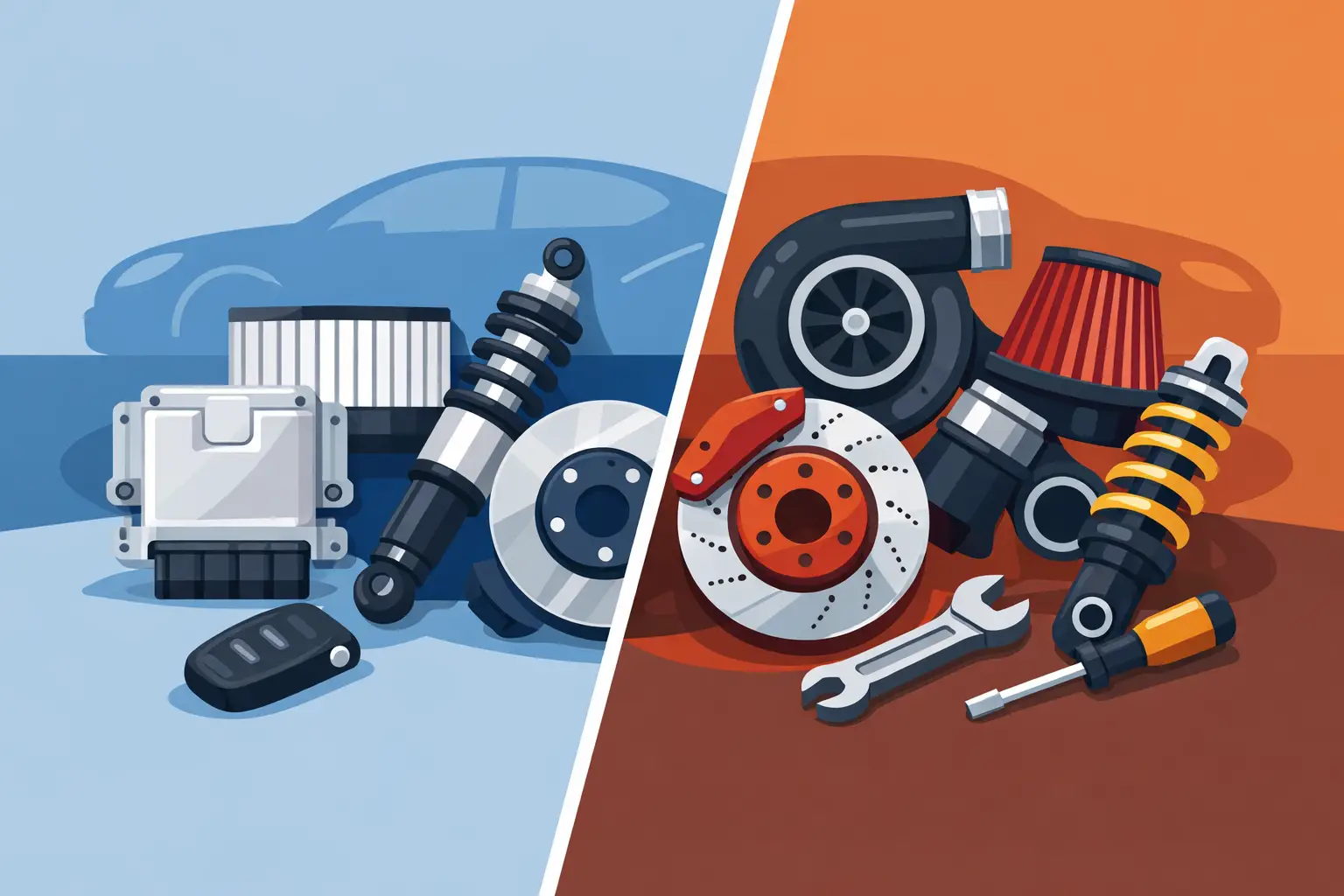
What OEM parts vs aftermarket parts really means
OEM stands for Original Equipment Manufacturer. In simple terms, an OEM part is made by the original manufacturer, or to that exact original specification for the brand. With phones, tablets and laptops, that usually means a part designed to match the device as closely as possible in fit, finish and performance.
Aftermarket parts are made by third-party manufacturers rather than the original brand. That does not automatically mean poor quality. Some aftermarket parts are built well and perform reliably. Others are made to hit the lowest possible price, and that is where problems start.
This is why the label alone does not tell the whole story. A customer might hear “aftermarket” and assume low grade, or hear “OEM” and assume perfect. In reality, there are quality levels within both categories, and a trustworthy repairer should explain the difference clearly.
Why the choice matters more than most people think
On paper, a replacement screen is a replacement screen. In practice, small differences can affect how your device feels and performs every day. A lower-quality display may look slightly duller, respond less accurately to touch, or drain the battery faster. A cheap charging port may work at first but fail earlier than expected. A poor battery can lead to overheating, unreliable charge reporting or reduced lifespan.
For many people, the issue is not just cost. It is downtime, repeat repairs and whether the device can be trusted again for work, study or home use. If your phone is your camera, sat nav, banking device and work line, a weak part can become an expensive inconvenience very quickly.
When OEM parts are usually the better option
OEM parts are often the safer choice when performance and consistency matter most. If you have a newer or higher-value device, using an OEM or OEM-grade part usually gives the closest result to the original experience. This is especially true for OLED screens, batteries in premium phones, and components that need precise calibration.
With screens, OEM parts tend to offer better brightness, colour accuracy and touch response. With batteries, they are more likely to communicate correctly with the device and deliver stable charging behaviour. With smaller internal parts, the benefit is often reliability – the connectors fit properly, the tolerances are correct, and the device is less likely to return with follow-on faults.
OEM also makes sense if you plan to keep the device for a while. Paying a bit more once can be better value than paying less for a part that does not last. For business users, parents managing family devices, or anyone who cannot afford repeated disruption, that reliability matters.
When aftermarket parts can still be a smart choice
Aftermarket parts can be the sensible option when the budget is tight, the device is older, or the repair needs to make economic sense. A customer with a three or four-year-old phone may not want to spend near-manufacturer prices on a premium screen if they expect to replace the handset later this year.
In those cases, a good-quality aftermarket part can be the right middle ground. It gets the device working again, keeps costs under control, and avoids replacing the entire unit unnecessarily. That can be perfectly reasonable, provided the quality has been checked and the trade-offs are explained honestly.
The key phrase there is good-quality. There is a big difference between a tested aftermarket part from a reputable supplier and the cheapest available component. A proper repair shop should know that difference and should not fit parts just because they improve the margin.
The biggest trade-offs to watch
Price
This is usually the first thing customers notice. Aftermarket parts are often cheaper, sometimes by a little and sometimes by a lot. That lower price can make a repair viable when it would otherwise feel hard to justify.
But low cost on the invoice does not always mean best value. If the part fails sooner, feels noticeably worse to use, or creates a need for another repair, the saving disappears quickly.
Performance
This matters most with displays and batteries. A non-original screen can sometimes have weaker brightness, less accurate touch sensitivity or a different finish. A lower-grade battery may charge inconsistently or lose health faster.
Some users will barely notice. Others will notice every day. If you use your device heavily for work, streaming, gaming or photography, performance differences matter more.
Fit and compatibility
OEM parts are generally more predictable for fit. With aftermarket parts, quality control can vary. Even when a part is technically compatible, it may not sit quite as neatly or perform exactly like the original component.
On modern devices, small compatibility issues can trigger warning messages, reduce certain functions or affect things like Face ID-related components, fingerprint systems or battery health reporting. A good technician will explain what can and cannot be preserved before work begins.
Warranty and peace of mind
A repair should come with clear warranty terms, regardless of which part type is used. That said, higher-grade parts often lead to fewer issues, and that reduces the chance of inconvenience later.
If a shop is vague about part quality or avoids discussing warranty, that is usually a warning sign. Clear pricing and warranty included should be standard, not a bonus.
OEM parts vs aftermarket parts for common repairs
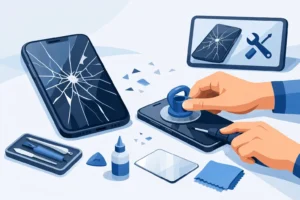
For screen replacements, the difference is often easiest to notice. If image quality and touch response matter to you, OEM or OEM-grade is usually worth considering. On a budget device or older handset, a good aftermarket screen may still be a practical choice.
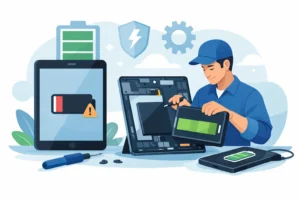
For batteries, quality matters more than many people realise. A poor battery can cause erratic behaviour that looks like a software fault or charging issue. This is one area where using a properly tested, high-quality part is especially important.
For charging ports, cameras, speakers and smaller components, the right answer depends on the device and the supplier quality. Sometimes an aftermarket part performs perfectly well. Sometimes only a higher-spec replacement gives a reliable long-term result.
Laptop and tablet repairs follow the same principle. Keyboards, fans, DC jacks and screens all have different quality ranges, and the best option depends on the machine’s value and intended lifespan.
How to choose without guessing
The best decision usually comes down to three questions. How valuable is the device, how long do you want to keep it, and how much does reliability matter in daily use?
If the device is essential and you want it to feel as close to original as possible, OEM is often the better route. If the device is older and you simply need a cost-effective repair done properly, a quality aftermarket part may be the smarter call.
What matters most is transparency. You should know what type of part is being fitted, what level of quality it is, whether there are any compromises, and what warranty comes with the work. If a repairer cannot explain that clearly, keep asking questions.
What a good repair shop should tell you
Before any repair goes ahead, the technician should be able to explain whether they are using OEM, aftermarket or OEM-grade components, and why that recommendation fits your device. They should also be honest if a cheaper option may affect brightness, battery reporting, durability or other day-to-day performance.
At iRepair, that is the standard we believe in – accurate diagnosis, quality parts, no hidden surprises, and repairs carried out with the right tools for the job. The point is not to upsell the most expensive part. It is to fit the right part for the device, the budget and the expected result.
A cheap repair that has to be redone is rarely cheap. A well-chosen repair, even if it costs a little more upfront, is usually the one that saves stress.
If you are weighing up OEM parts vs aftermarket parts, do not focus on price alone. Ask what you are getting, how it will perform, and how confident the technician is in the final result. The best repair is the one you do not have to think about again a week later.