

A phone dropped in the sink, caught in the rain, or left in a damp gym bag can go from working normally to completely unresponsive in minutes. If you are searching for water damage phone repair Ascot, the most important thing to know is that speed matters – but so does doing the right thing.
Water damage is rarely just about the water itself. Once liquid gets inside a device, it can start corroding connectors, shorting components and damaging the battery or charging circuit. Sometimes a phone still turns on after exposure, which gives people false confidence. A handset that seems fine on the day can develop charging faults, screen problems, sound issues or sudden shutdowns later.
What water damage actually does to a phone
Modern phones are tightly packed with delicate components. Even models with water resistance are not immune. Water resistance can weaken over time because of drops, worn seals, previous repairs or general age. Salt water, sugary drinks, coffee and cleaning fluids are usually worse than plain water because they leave residue behind and accelerate corrosion.
The biggest risk is not always immediate total failure. In many cases, liquid reaches the charging port, battery connector, screen backlight circuit, cameras or motherboard. That can cause patchy symptoms such as distorted audio, a black display with vibration still working, overheating, weak signal, random restarts or a battery that drains unusually fast.
This is why proper diagnosis matters. A phone that only needs cleaning and board treatment should not be written off too quickly, but a phone with heavy corrosion or a damaged power circuit needs honest advice. The right repair depends on how much liquid entered, what kind of liquid it was, how long the phone stayed wet, and whether it was plugged in or charged afterwards.
What to do before booking water damage phone repair in Ascot
The first few steps can improve the odds of saving the device. If your phone has been exposed to liquid, switch it off straight away if it is still on. Do not test buttons repeatedly, do not keep trying the charger, and do not connect it to a power bank or laptop. Electricity and moisture are a bad combination.
Remove the case, SIM tray and any accessories. Dry the outside gently with a clean cloth. If the phone has obvious droplets in the charging port, leave it upright in a dry place with airflow. That said, external drying only deals with surface moisture. It does not remove liquid trapped under shields or around board components.
One common mistake is putting the phone in rice. Rice does not professionally dry internal components, and it certainly does not stop corrosion. It can also leave dust and starch in openings. Another mistake is using strong heat from a radiator or hairdryer. Excess heat can warp seals, damage the screen or push moisture deeper into the device.
If the phone contains important photos, messages, work apps or business data, avoid repeated power-on attempts. Every extra attempt can increase the damage. At that stage, getting the handset inspected with proper tools gives you the best chance of either repair or data recovery.
Signs you need professional water damage phone repair Ascot
Some water-damaged phones fail immediately. Others show slower, more confusing symptoms. If you notice any of the following after liquid exposure, the device needs proper assessment:
- It will not turn on or charge
- The screen flickers, stays black or shows lines
- The speaker sounds muffled or the microphone stops working
- Face ID, fingerprint sensor or cameras become unreliable
- The phone heats up when idle
- It restarts randomly or battery life drops sharply
These faults do not always mean the phone is beyond repair. In many cases, professional cleaning, diagnostic testing and component-level repair can restore full function. The key is not to leave it sitting for days while corrosion spreads.
How a proper repair process works
A trustworthy repair should start with inspection, not guesswork. At iRepair, the focus is on diagnosing the actual fault path rather than swapping random parts and hoping for the best. With water damage, that approach matters because visible symptoms do not always point to the root cause.
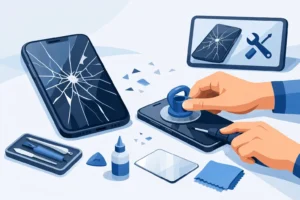
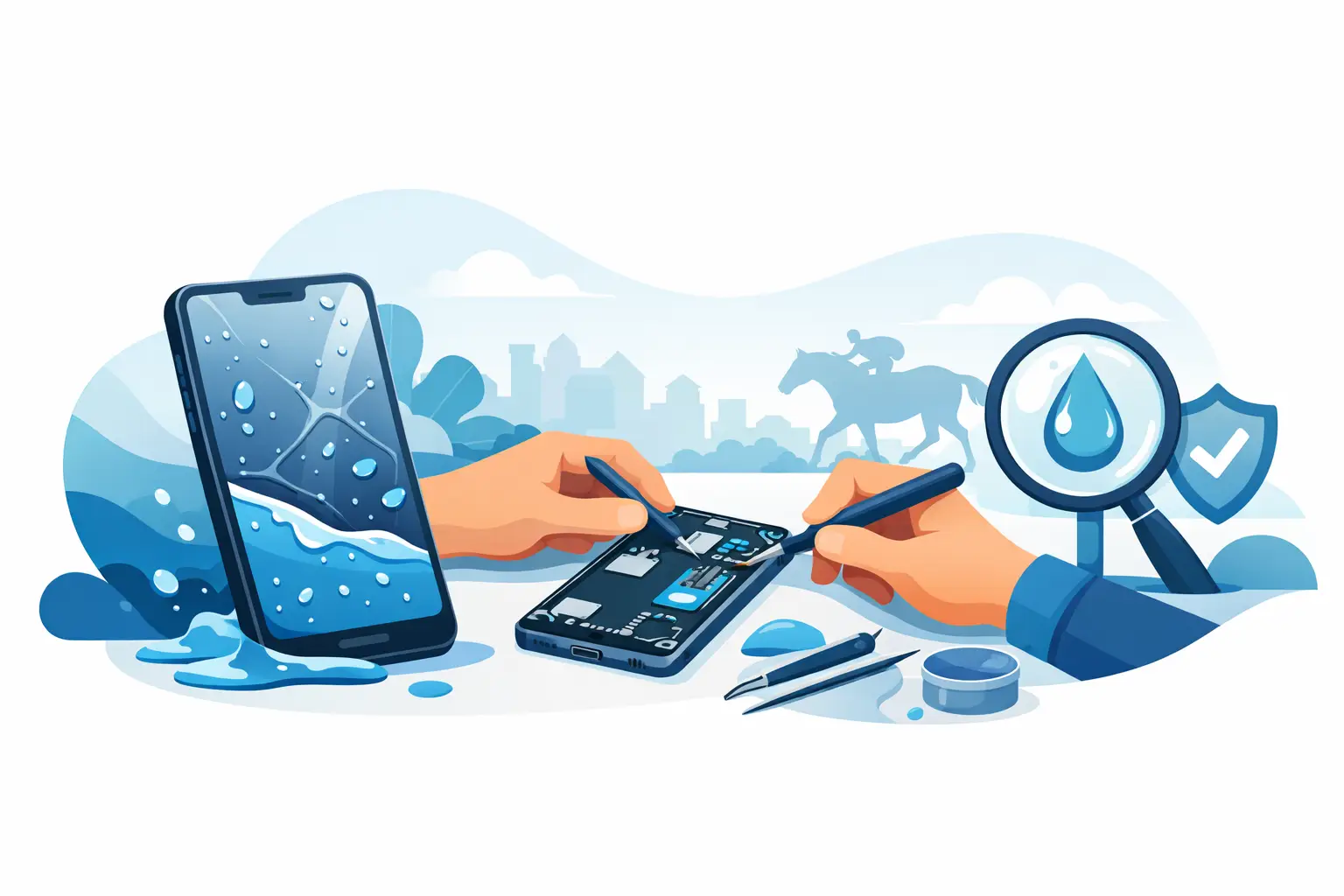
A technician will usually open the device, inspect the internal condition and check for moisture markers, residue and corrosion. From there, they can assess whether the issue is limited to connectors and shields or whether the motherboard, battery, screen or charging assembly has also been affected.
Internal cleaning and board treatment
Professional liquid damage treatment normally involves careful disassembly and specialist cleaning methods designed to remove corrosion and contamination. This is very different from simply drying the handset. The aim is to stop ongoing damage and identify weakened areas before they fail completely.
Testing key components
Once cleaned, the phone needs structured testing. That includes power behaviour, charging, display output, touch response, cameras, speakers, microphones, wireless connectivity and battery health. If a charging port or screen has already been damaged by the liquid, those parts may need replacement alongside the internal treatment.
Honest advice on repair value
Not every water-damaged phone is worth repairing. If the board damage is extensive, or if multiple high-value components have failed, a good shop should say so clearly. Transparent pricing matters here. Customers do not want hidden surprises or vague promises. They want to know whether the repair is sensible, what can be recovered, and what the likely outcome is.
Can water-damaged phones always be saved?
No – and any repairer who suggests otherwise is overselling it. Water damage is one of the most variable faults in electronics. Two phones exposed to the same amount of liquid can end up with very different outcomes.
It depends on the device model, the liquid involved, how quickly it was switched off, whether it was charged afterwards, and how long the corrosion has had to spread. A fast response often improves the chances. If the damage is caught early, the repair may be straightforward. If the phone has been repeatedly powered on for several days, the fault can become much more serious.
There is also a difference between restoring function and guaranteeing long-term reliability. Sometimes a phone can be revived, backed up and used normally for years. In other cases, the realistic goal is to recover data or get the device stable enough for replacement planning. Good repair advice should reflect that nuance.
Why local repair is often the practical choice
For most people, a phone is not optional. It is how they work, bank, travel, study and stay in touch. Waiting a week or more for a manufacturer route is not always realistic, especially when there is valuable data at stake.
A local repair service gives you the chance to speak directly to a technician, get a clear assessment and act quickly. That is especially useful with water damage because delays matter. Same-day inspection, walk-in convenience and straightforward pricing take a lot of the stress out of the situation.
For customers in and around Ascot, Bracknell and nearby areas, that local access can be the difference between a recoverable repair and a phone that deteriorates beyond repair while sitting untouched.
How to reduce the risk next time
Not all liquid accidents are avoidable, but some habits do help. A good case can reduce impact damage that weakens water seals. Avoid charging in damp bathrooms or kitchens, keep drinks away from desks and bedside tables, and be cautious with phones in pockets during heavy rain. If your phone has had a previous screen or back glass break, do not assume its original water resistance still holds.
It is also worth keeping regular backups. Water damage becomes far less stressful when your contacts, photos and documents are already safe elsewhere. Repair is then about restoring the device, not rescuing everything you rely on from a failing motherboard.
When to get help
If your phone has been exposed to water and is now behaving oddly, the best time to act is now, not after another day of charging attempts and hopeful restarts. Early inspection gives the clearest picture and the strongest chance of a successful outcome.
If you need advice, a proper diagnostic from a local technician is the sensible next step. You can learn more about professional repair support at https://www.irepairphones.co.uk. Sometimes the fix is simpler than expected. Sometimes the honest answer is that recovery is limited. Either way, clear diagnosis beats guesswork every time.
A water-damaged phone does not always need replacing, but it does need the right attention quickly. The sooner it is assessed properly, the better your options tend to be.